
Affordable SEO web design means buying the build and the search work as one job rather than two. Most small businesses do the opposite. They commission a website, wait six months, then hire someone to make it rank, and that second person spends the first month undoing decisions the first one made. The sequence costs more than doing both together, which is the part nobody explains at the quoting stage. For what the build side alone involves, see affordable web design for small businesses.
Here is what actually gets undone, and what it costs you.
The sequence that wastes the most money
Picture how affordable SEO web design usually gets bought. Or rather, how it does not. A business commissions a website. The designer asks what pages they want, builds them, and launches. Everyone is pleased. Six or eight months pass and enquiries have not moved, so the owner hires an SEO agency.
That agency opens the site and finds a structure shaped by what the owner asked for rather than what people search for. The service pages describe the business in its own language. The page names echo internal jargon. Nothing looks broken. It simply never had to answer a search query.
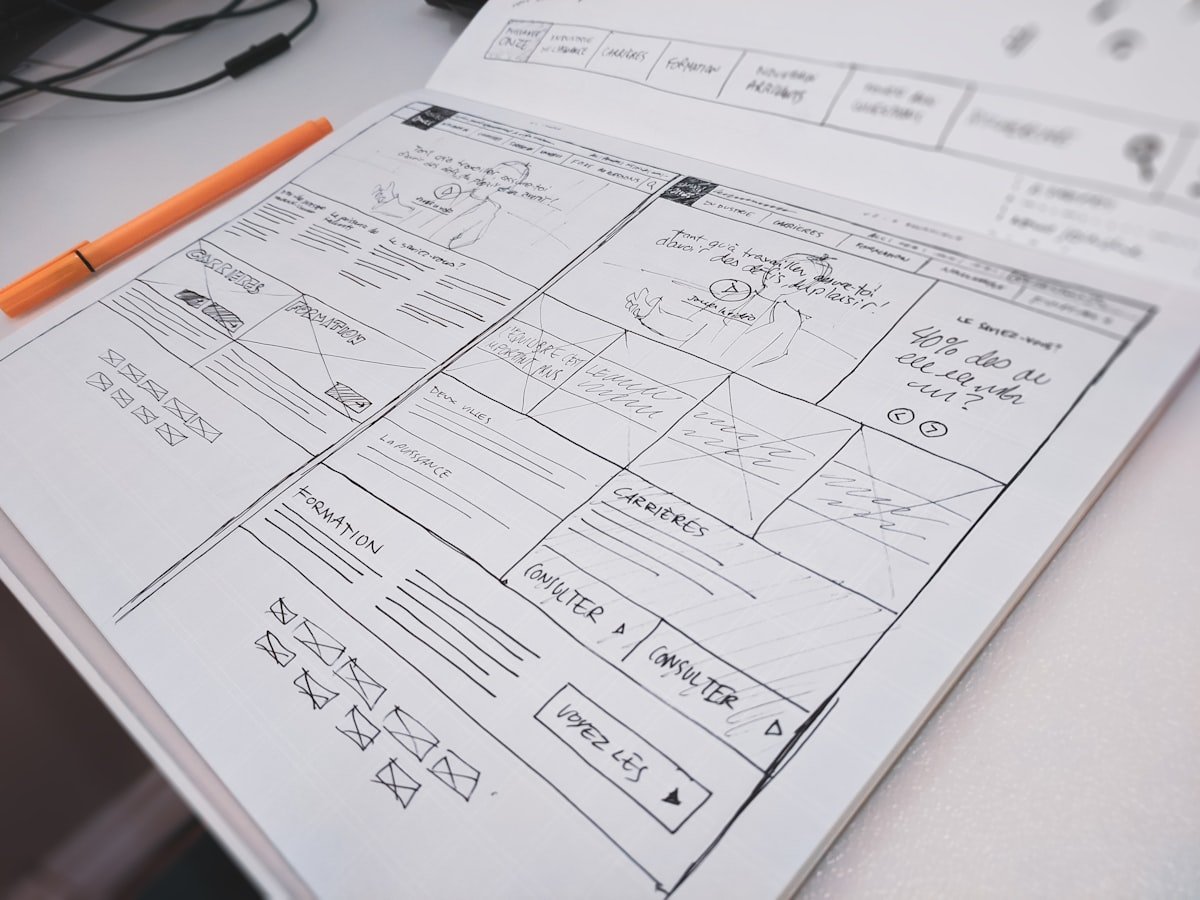
So the first month of the SEO engagement goes on rework. They create new pages for the terms people actually type. Old pages get merged or pointed elsewhere. Then the internal linking needs rebuilding, because the navigation suited a brochure rather than a search engine. You now pay a second supplier to partly redo the first supplier’s work, and neither of them did anything wrong.
Affordable SEO web design just moves those decisions to the start, where they cost hours instead of a project.
What gets undone on a freshly built site
These turn up on almost every site we audit within a year of launch, and every one of them is an affordable SEO web design decision made too late. None of them are exotic. All of them are cheaper to prevent than to fix. A quick free SEO audit will tell you which of the two you actually need.
| What the build did | Why it has to change | Cost to fix after launch |
|---|---|---|
| One “Services” page covering six services | Six services need six pages to rank separately | Six new pages, written and linked |
| Page names using internal jargon | Nobody searches for what you call it internally | Renaming plus redirects |
| Navigation built for a brochure | Internal linking carries ranking signals | Structural rework across the site |
| Copy written to sound impressive | Search needs specificity, not adjectives | Rewriting every page |
| No location content at all | Local intent is where small business demand lives | New pages from scratch |
| Images at full camera resolution | Speed is a ranking and conversion input | A day of remediation |
The row that costs the most
Look at the first row on its own. Splitting one services page into six is not a tweak. It changes the site map, the navigation, the internal links and the content plan. Decided during the build it costs a conversation. Decided afterwards it is most of a rebuild.
The row we argue about most is the copy one. Owners grow attached to the words on their site, reasonably so, and hearing that those words need rewriting eight months after paying for them lands badly. Write them once at the start, with search demand already in front of you, and that conversation never happens.
What “SEO included” usually means on a quote
Nearly every affordable SEO web design proposal says SEO is included. Very few define it, and the gap between what buyers assume and what suppliers mean is where the disappointment comes from.
What the words on the quote mean
| What the quote says | What it usually means | What you assumed |
|---|---|---|
| “SEO friendly” | The theme has heading tags | Someone thought about rankings |
| “SEO optimised” | A plugin is installed | The plugin was configured |
| “On-page SEO included” | Title tags were filled in | Keyword research happened first |
| “Google ready” | The site can be crawled | It will appear in results |
| “Submitted to Google” | A sitemap was sent | Something ranks |
“SEO friendly”
Usually means
The theme has heading tags. Nobody decided what the site should rank for.
“SEO optimised”
Usually means
A plugin is installed. Whether it was configured is a separate question.
“On-page SEO included”
Usually means
Title tags were filled in, most likely after the pages already existed.
“Google ready”
Usually means
The site can be crawled. So can every other site on the internet.
“Submitted to Google”
Usually means
A sitemap was sent. Submission is not ranking, and never has been.
“Keyword mapped”
Worth having
Somebody chose a target phrase per page before the sitemap existed. Ask to see the mapping.
SEO friendly means the theme has heading tags. SEO optimised means a plugin is installed. On-page SEO included means title tags were filled in. Google ready means the site can be crawled. Submitted to Google means a sitemap was sent. Keyword mapped is the only one worth having: a target phrase chosen per page before the sitemap existed.
Decoding the claims
None of those lines is dishonest. They are all technically true and none of them involve anyone deciding what the site should rank for. That decision is the actual work, and it is missing from almost every build quote in the affordable bracket.
Ask one question and the ambiguity disappears. “Which pages are we trying to rank, for which searches, and how did you choose them?” A real answer names pages and phrases. A vague answer tells you SEO was a checkbox.
What should happen at build time
Six things define real affordable SEO web design, and none of them add much to a build fee when they happen in the right order.
Six items: keyword research before the sitemap, one page per target phrase, copy written from the research, planned internal linking, a stated speed target, and analytics live on day one.
Item six sounds administrative and it is the one that hurts most when skipped. Plenty of businesses reach month six with no idea whether the new site improved anything, because nobody installed the measurement. Then the argument about whether the project worked has no evidence on either side.
Together or separately: what it actually costs
The arithmetic behind affordable SEO web design is the whole argument, so here it is without the sales gloss.
| Bought separately | Bought together | |
|---|---|---|
| Keyword research | Month 8, after the build | Week 1, before the sitemap |
| Page structure | Rebuilt to match research | Built correctly once |
| Copy | Written, then rewritten | Written once |
| Redirects | Needed, because pages moved | Not needed |
| Time to first rankings | Month 12 onward | Month 4 onward |
| Total paid | Build fee plus rework | Build fee plus a modest research uplift |
SeparateTogether
Pattern observed across our own projects. Your figures will differ; the ratio rarely does.
Bought separately, first rankings arrive around month twelve and the total paid is the build fee plus rework. Bought together, first rankings arrive around month four and the total is the build fee plus a modest research uplift, roughly 62 percent of the separate route.
The row that surprises people
The row that surprises owners is the second to last one. Buying separately does not only cost more money, it costs most of a year. The site sits there being invisible while the clock runs, and that lost time is worth more than the fee difference for most businesses.
For what the underlying build itself should cost, our breakdowns of small business website cost and website design cost in the UK cover each market properly, so those numbers are not repeated here.
When buying them separately is the right call
Affordable SEO web design is not always the right purchase, and we would be a poor source if we pretended otherwise. It is not, and there are three situations where splitting them is genuinely better.
The first is when your existing site is fine. If it loads quickly, has sensible structure and simply lacks content, you need SEO work rather than a new build. Commissioning a rebuild just to bolt search work onto it costs far more than buying that work directly.
The second is when nobody searches for what you sell. Some businesses genuinely run on referral and relationships. A beautiful site helps you close those referrals and search work will return very little. Spend on the site, skip the SEO retainer, and be honest with yourself about which category you are in.
The third is when the two suppliers are genuinely specialists and they talk to each other. A designer and an SEO consultant who share a document and argue about the sitemap early will beat a mediocre bundle every time. The problem was never two suppliers. It was two suppliers who never met.

How to brief affordable SEO web design properly
Five answers, given to everyone you ask for an affordable SEO web design quote. They take twenty minutes to prepare and they make competing quotes comparable for the first time.
| Question | Why it changes the quote |
|---|---|
| Which services do you want found separately? | Sets how many pages exist, which drives most of the cost |
| Which towns or areas matter? | Determines whether location content is in scope |
| Are you replacing a site that already gets traffic? | Tells us whether a redirect map is needed |
| Who writes the words? | The single biggest variable in any quote |
| Who signs things off, and how fast? | Drives the timeline, and quietly drives the price |
Send those five answers to three suppliers and the quotes come back describing the same job. Without them, each supplier guesses differently and you end up comparing three unrelated proposals on price alone.
Our guide to website design packages sets out the nine items any proposal should itemise, and the same test applies whether SEO is bundled or not.
Why the order matters more than the budget
Two businesses buy affordable SEO web design for the same money and get very different outcomes. The difference is almost never the size of the budget. It is what got decided first.
Business A picks a designer, approves a homepage they like, and fills in the pages afterwards. Business B works out which searches matter, agrees a sitemap from that, and only then looks at design. Both spend the same. Eighteen months later one of them appears in results and the other wonders why the pretty site never worked.
That is uncomfortable if you have already built the wrong way round. It is also fixable, and cheaper than a full rebuild in most cases. Split the services page, rename what needs renaming, redirect properly, and rewrite the pages that matter commercially. Three or four weeks of work rather than a project.
We would rather tell an enquirer that than sell them a rebuild they do not need. It costs us the larger job and it is the right answer often enough that we have stopped pretending otherwise.
If you are still deciding between a builder platform and a professional build before any of this applies, website builder vs web designer covers that decision first.
What we would check on your current site first
Before anybody quotes you for affordable SEO web design, four checks tell you whether you need a rebuild or just the search work. All four take under an hour and you can run them yourself.
| Check | How | What a bad result means |
|---|---|---|
| Mobile speed | PageSpeed Insights, mobile tab | Fixable on most sites. Rarely needs a rebuild on its own. |
| Page count vs services | Count your service pages against services you sell | Structural. This is the one that usually forces a rebuild. |
| Indexed pages | Search site:yourdomain.com | Fewer than you have means a technical problem worth diagnosing |
| Unique page titles | Read the blue links in that same search | Repeats or theme names mean nobody did the basics |
Row two carries most of the weight. Everything else on that list is a fix. A site with one services page covering six services has a structural problem, and structure is the expensive thing to change after launch.
Run those four before you talk to anyone. You will know which conversation you are actually having, and any supplier who tells you something different has some explaining to do.
Two mistakes that cost the most
Both mistakes come up constantly in affordable SEO web design projects, and both look sensible at the time.
The first is launching without measurement and deciding later whether it worked. Without analytics running from day one you have no baseline, so month six becomes an argument about impressions nobody recorded. Install it before launch, not when somebody asks a difficult question.
The second is treating the launch as the finish. A site that gains no new page after going live stops climbing within a quarter, whoever built it. Affordable SEO web design buys you a structure that can rank. It does not fill that structure for you, and no agency can sell you the habit of publishing.
An hour a fortnight is enough. One page about a job you did, a question customers keep asking, or a service you have started offering. Our small business SEO checklist covers what to prioritise once the site is live.
What to expect once it launches
Honest timelines, because this is where most agencies lose their clients’ trust.
| Period | What normally happens |
|---|---|
| Weeks 1–4 | Google crawls and indexes. Very little visible movement. |
| Months 2–3 | Impressions start rising. Positions still deep. |
| Months 4–6 | Long-tail phrases begin ranking. First enquiries attributable to search. |
| Months 6–12 | Competitive commercial phrases move, provided the domain earns links. |
Weeks one to four, crawling and indexing with little visible movement. By months two to three, impressions rise while positions stay deep. Long-tail phrases rank across months four to six, bringing the first attributable enquiries. From month six to twelve, competitive commercial phrases move provided the domain earns links.
The signal to watch for
With affordable SEO web design done properly, impressions rise before positions. That is the pattern to watch. It is the earliest honest signal that the structure works, and it usually appears a couple of months before anything shows up in your enquiry inbox.
One caveat that matters more than most agencies admit. A well-built site ranks faster than a badly built one, but neither ranks for competitive terms without other websites referencing yours. Build quality removes the obstacles. It does not manufacture authority, and anyone promising page one from a build alone is describing something that does not happen.
Is affordable SEO web design cheaper than buying them separately?
Usually, because the research happens before the build rather than after it. Buying separately means paying a second supplier to redo structure and copy that already exist. The bigger saving is time, because a site designed around search demand starts ranking months earlier.
My web designer says SEO is included. Is it?
Ask which pages they are trying to rank, for which searches, and how they chose them. A real answer names pages and phrases. If they point at an SEO friendly theme or an installed plugin, you have the ability to do SEO later, not SEO itself.
Do I need a new website to rank?
Often not. If your current site loads quickly and has a sensible structure, you need content and links rather than a rebuild. Get an honest answer on this before commissioning anything, because rebuilding is the most expensive way to fix a content problem.
How much does the SEO part add to a build?
Less than you would expect at the start and considerably more at the end. Research and structure decisions during the build are hours. The same decisions after launch mean new pages, redirects and rewritten copy.
Can I do the SEO myself after the build?
Yes, and plenty of owners do it well. The part that is hard to retrofit is structure, so agree the sitemap and page targets during the build even if you plan to write everything yourself afterwards.
How long before it pays for itself?
Most small businesses reach break-even somewhere between month four and month twelve, depending on competition and whether anyone keeps adding content. A site that gains no new pages after launch stops climbing within a quarter.
The one question worth asking
Whoever you hire for affordable SEO web design, ask to see the sitemap before you see a design.
A supplier who leads with a homepage mockup is selling you a look. A supplier who leads with a list of pages and the search terms each one targets is selling you a site that gets found. Both can produce something attractive. Only one of them has decided what the website is for.
That single request separates real affordable SEO web design from a build with a plugin installed, and it costs you nothing to make.
Timelines and cost patterns described here reflect our own project experience and vary by market and competition. General commercial guidance, not a quotation. Last reviewed August 2026.