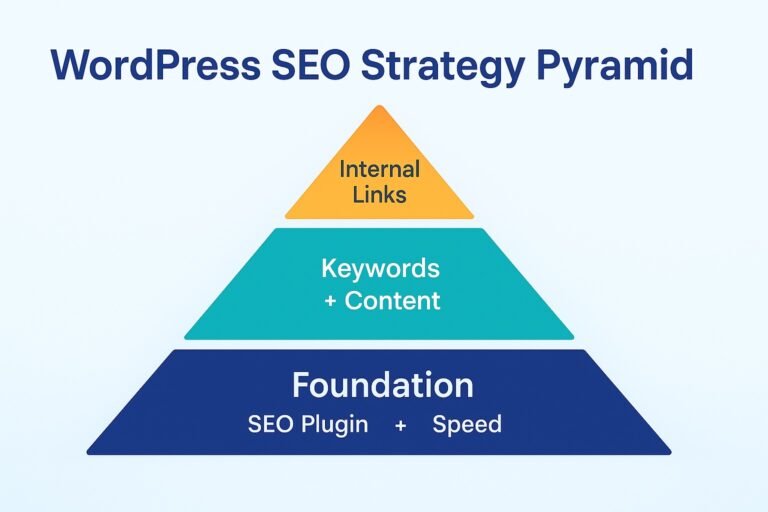
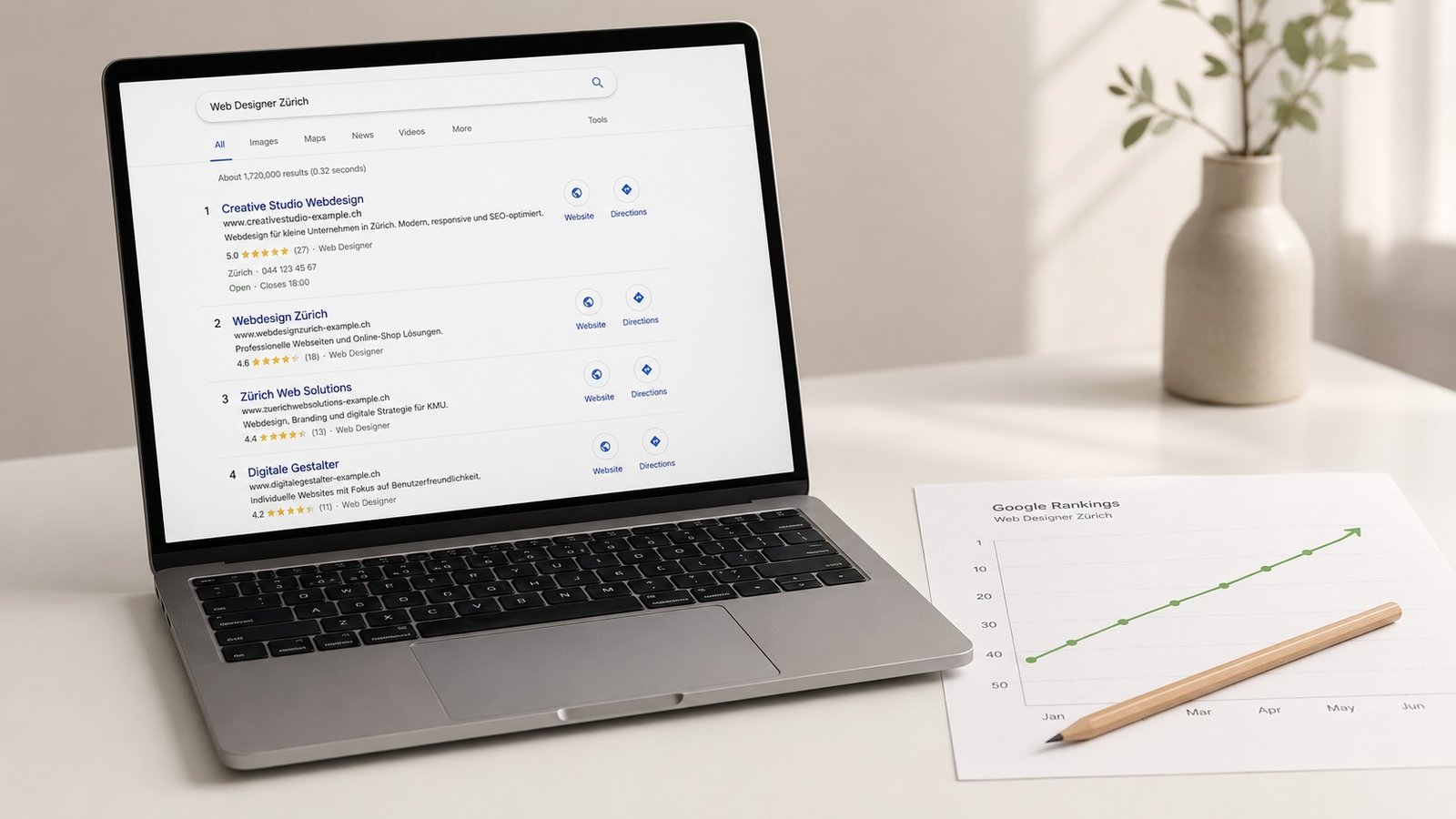
Most small business SEO checklists are copy-pasted from articles about enterprise websites and scaled down. The problem is that enterprise SEO and small business SEO are structurally different disciplines. Enterprise sites have DR 80+ domains, hundreds of referring domains, and dedicated technical teams. Small business sites are starting from a lower domain authority, competing in tighter geographic areas, and need to make every technical and content decision count more, not less.
This checklist is built specifically for small business sites, most of which run on WordPress and serve a defined geographic area or niche market. We have prioritised by actual impact on rankings, not by what sounds comprehensive.
Technical SEO checks
Technical SEO is the foundation that everything else sits on. Content and links deliver diminishing returns when the technical layer is broken. Run these checks first — on the live site, not a staging environment — before moving to anything else.
- Crawl the site with Screaming Frog (free up to 500 URLs)High
Reveals broken links, redirect chains, duplicate title tags, missing meta descriptions, and pages blocked by robots.txt — all in one pass. Worth doing before any other technical work.
- Verify Google Search Console is connected and indexing correctlyHigh
Check the Coverage report for “Excluded” URLs. Pages showing as “Crawled — currently not indexed” or “Discovered — currently not indexed” need investigation. GSC often reveals indexing problems weeks before they show up in rankings.
- Check Core Web Vitals in GSC (not just PageSpeed Insights)High
PageSpeed Insights uses lab data. GSC’s Core Web Vitals report uses real-user field data. The two can differ significantly — especially INP, which only appears in real-user data. A passing Lighthouse score and a failing CWV report can coexist.
- Confirm canonical tags are set correctly on every key pageHigh
Canonical tags tell Google which version of a URL is authoritative. Missing or incorrectly set canonicals cause PageRank dilution when the same content is accessible via multiple URLs (with and without trailing slash, HTTP vs HTTPS, www vs non-www).
- Check for redirect chains (A redirects to B redirects to C)Medium
Every redirect hop loses approximately 15% of link equity. A chain of three redirects means the destination page receives roughly 70% of the equity the source had. Clean chains to single hops wherever possible.
- Structured data validated via Google’s Rich Results TestMedium
Structured data errors do not always break the markup visually — they often render fine for users while being invisible to Google’s rich result parser. Run the test on your homepage and at least one service page.
- Internal link audit: no important page more than three clicks from the homepageMedium
Google’s crawlers allocate crawl budget based on link depth. A page buried five clicks deep is crawled infrequently and ranked accordingly. Map your site structure and surface any important pages that are too deep.
On-page SEO checks
On-page SEO is where most small business checklists start and most small business SEO work ends. That is a mistake: on-page alone rarely moves a site from page three to page one. But on-page errors actively suppress rankings, so these checks are about removing blockers rather than expecting gains.
- One primary keyword per page, consistently used in H1, first paragraph, and at least one H2High
Keyword in H1 is the minimum. Keyword in the first 100 words matters. Keyword in a mid-page H2 signals topical depth. Do not stuff — one natural use in each location is the target, not maximum occurrences. Our compact keywords strategy covers how to pick the phrase in the first place.
- Title tags: unique, under 60 characters, keyword in the first 40%High
Yoast and RankMath both flag this. The less obvious check: are title tags actually unique across pages, or have they been auto-generated with the same pattern (Site Name | Page Name) that produces similar-looking results in the SERP?
- Meta descriptions: 120–156 characters, written to earn the click, not describe the pageMedium
The meta description is advertising copy, not a summary. The question to ask is not “does this accurately describe the page?” but “does this make someone in the SERP want to click this over the four results around it?”
- All images have descriptive alt text (not keyword-stuffed, not empty)Medium
Alt text serves two purposes: accessibility for screen readers, and context for Google Images. “image001.jpg” fails both. “small business website design portfolio — law firm homepage” passes both.
- Internal links use descriptive anchor text, not “click here” or “read more”Medium
Anchor text is a relevance signal. “Read more about our web design process” tells Google what the linked page is about. “Click here” tells it nothing. Audit your internal links and replace generic anchors.
- Content length matches or exceeds top-ranking pages for each target keywordMedium
Not a universal “write 2,000 words” rule — a rule that says check what is ranking and match depth. For some queries, 600 words of precise, expert content outranks 2,500 words of padded generic coverage. Check the SERP before setting a word count target.
- No keyword cannibalization: two or more pages targeting the same keywordHigh
When two pages target the same keyword, Google has to choose which one to rank. It often chooses neither, ranking both weakly. Use Google Search Console to identify pages competing for the same queries, then consolidate or differentiate.
- URLs are short, descriptive, and include the primary keywordLower
/affordable-website-design-packages/ outperforms /page?id=2587 on every measure: readability, click-through rate, and keyword signal. If your CMS is generating ID-based URLs, change this in settings before launch — after launch it requires redirects.
Local SEO checks
For small businesses serving a specific geographic area — a city, a region, or a defined service radius — local SEO is where most of the meaningful ranking gains are made. Local search results (the map pack and localised organic results) have lower competition than national results and higher conversion intent. A local plumber ranking third in Google Maps gets more bookings than a national plumbing directory ranking first in organic. The checks below are non-negotiable for any business with a physical location or service area.
- Google Business Profile verified, complete, and linked to websiteHigh
Verified (postcard or phone), not just claimed. All categories filled in. Hours, phone, address, and website URL matching exactly what is on the website. Inconsistencies between GBP and the website are a negative local ranking signal.
- NAP (name, address, phone) consistent across website, GBP, and all directoriesHigh
Google cross-references your business information across dozens of sources. “St” vs “Street,” “+44” vs “0,” and abbreviated vs full business names all create inconsistencies that erode local authority. Audit your top 20 directory listings and standardise.
- At least 10 genuine reviews on GBP, with responded-to reviewsHigh
Review count and recency are local ranking factors. Responding to reviews (positive and negative) is a GBP engagement signal. A business with 10 reviews and 10 responses outperforms a business with 10 reviews and zero responses, other things being equal.
- Service area pages for each major city or region servedMedium
A single “Areas We Cover” page with a list of postcodes is invisible for location-specific searches. A dedicated page per served location — with unique content about that area — targets the full range of localised queries.
- LocalBusiness schema with address, coordinates, phone, and opening hoursMedium
Schema markup helps Google surface your business in knowledge panels with accurate information. For local businesses, the markup investment-to-impact ratio is high — it takes an hour to implement and delivers persistent SERP visibility.
- GBP posts published at least twice per monthLower
GBP posts appear in your profile panel and signal active management to Google. Businesses that post regularly show higher local pack appearance rates than inactive profiles with otherwise equivalent optimisation.
Content and authority checks
Content and authority are the two factors that determine whether a technically clean, well-optimised site ranks in the top five or stalls at position eight to fifteen. Technical SEO and on-page work are necessary conditions, not sufficient ones. These checks are the difference between a site Google can crawl and a site Google trusts.
- Each service page has at least one piece of social proof visible above the foldHigh
A testimonial, case study excerpt, star rating, or client logo block above the fold reduces bounce rate by signalling credibility before the visitor has to scroll. Lower bounce rate is a behavioural engagement signal that correlates with rankings.
- At least one new piece of content published per monthMedium
Not for content volume’s sake. For two practical reasons: new content creates new keyword targets, and regular publishing signals to Google that the site is actively maintained. Both improve crawl frequency, which improves indexation speed for new pages.
- At least 10 referring domains from legitimate sourcesHigh
Domain authority (or DR, depending on the tool) is a function of how many unique domains link to your site. A small business site with zero referring domains starts at a structural disadvantage for competitive queries regardless of how good the on-page optimisation is.
- No toxic or spammy backlinks in your profileHigh
Check Ahrefs Site Explorer or Google Search Console links report for linking domains. Private blog networks, link farms, and mass-submission directories that appeared in your profile from a previous SEO provider need to be disavowed via GSC’s disavow tool.
- Pillar pages and topic clusters linked internally with keyword-rich anchorsHigh
A content strategy without an internal linking strategy is a collection of pages rather than a site. Link related content together, with the most authoritative page in each topic cluster linked to most frequently. This is how Google understands your topical authority.
- E-E-A-T signals visible on every key page: author bio, credentials, experience markersMedium
Experience, Expertise, Authoritativeness, and Trustworthiness. For small businesses this means a named author on service and about pages, real credentials or years of experience stated, and evidence of work (portfolio, case studies, specific results) rather than vague claims.
How to prioritise when you cannot do everything at once
Every small business SEO project faces the same resource constraint: finite time and budget, and a checklist that could expand indefinitely. The prioritisation logic we use is simple: fix technical blockers first (anything preventing crawling or indexing), then address on-page basics on the highest-traffic pages, then local SEO if you serve a geographic area, then content and authority as an ongoing programme.
The items marked High across the four categories above represent roughly 80% of the ranking impact. The Medium and Lower items produce marginal gains that compound over time but should not be prioritised over the High items even if they feel quicker to implement.
If working through this checklist reveals more than you want to manage alone, our affordable SEO services for small businesses handle all of the above as part of a managed programme. And if the site itself needs rebuilding before any SEO investment makes sense, our small business website design service starts with the technical and structural foundation that every item on this checklist depends on.
If this checklist reveals that the site itself needs a rebuild before SEO investment makes sense, our web design process guide explains how we approach that and our small business website checklist covers the build standards we work to. And if you would rather hand the whole programme to us, our affordable SEO services cover every item above as part of a managed package.
Week-by-week implementation plan
The small business SEO checklist above is 27 checks across four categories. Doing all 27 in the first week is not realistic and not necessary. This is the sequencing we use with new clients — structured around what blocks ranking versus what improves it, and ordered so that later work builds on earlier foundations rather than fighting against unfixed problems.
How long does SEO actually take for a small business?
The honest answer almost no agency gives: three to six months before you see meaningful movement for most small business keywords, and six to twelve months before SEO becomes a reliable lead channel. Anyone promising first-page rankings in thirty days is either targeting keywords nobody searches for, or using tactics that will collapse when Google catches up.
The variables that actually determine your timeline: how competitive your keywords are (a plumber in a town of 20,000 will rank faster than a web designer in London), your domain’s existing authority (a site with five years of history ranks faster than a new domain), how many technical blockers you start with (a site that Google is partially not indexing needs fixing before any other work matters), and how consistently you publish and earn links in the months after your initial optimisation.
The early signal to watch is not rankings — it is impressions in Google Search Console. Impressions growing month-over-month means Google is showing your pages to more people, even if clicks are not yet moving. That is the indicator that your foundational work is taking hold. Rankings follow impressions; revenue follows rankings. Patience at the impressions stage is what separates businesses that get real SEO returns from businesses that quit at month two and conclude “SEO does not work.”
AI Overviews and what they mean for your local SEO in 2026
Google’s AI Overviews now appear at the top of many search results, delivering a generated answer before any organic link. For small businesses, this creates a split outcome depending on search type.
Informational queries (“how to clean gutters yourself”) are increasingly answered by AI Overviews without the user clicking anywhere. If your content strategy is built around capturing this kind of traffic, you need to accept that a portion of it is now absorbed by the AI layer. The mitigation: be cited as a source in the AI Overview itself, which comes down to six structural changes we cover in our guide to AI Overviews for small businesses. Content with specific, verifiable data — your actual case results, your local market knowledge, your named methodology — gets cited. Generic “here are five tips” content does not.
Local and commercial queries (“plumber near me,” “web designer in Birmingham”) are largely unaffected — AI Overviews rarely replace local pack results or commercial intent results. This is where local SEO investment continues to deliver its strongest return. Google still needs to send people to businesses that can actually serve them. The checklist in this post is oriented around exactly these query types: local visibility, conversion-ready pages, and the trust signals that make Google choose your business over a competitor with similar optimisation.
Frequently asked questions
Going deeper on each layer
The checklist tells you what to fix. These explain how, one layer at a time.
- WordPress SEO — Platform-specific work if your site runs on WordPress.
- backlinks for small business websites — How a small business earns links without a budget for them.
- content marketing for small business — Turning publishing into rankings rather than a chore.
- website speed optimisation — The technical layer, in the order worth fixing it.
- the Google spam update — What changed, and what recovery actually looks like.
- free SEO audit — Why the automated ones miss what matters, and what to check instead.
- how to choose an SEO agency — A seven-step framework for when you decide to hire.
- SEO consultant services — What a consultant does that an agency retainer usually does not.
- affordable SEO web design — Why buying the build and the search work together costs less than doing them in sequence.