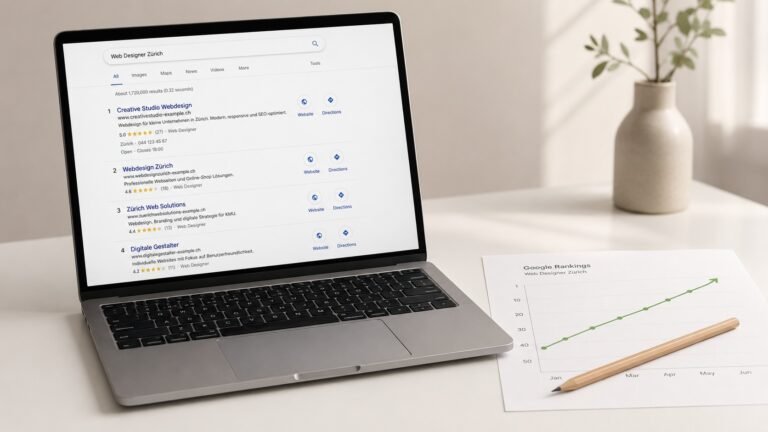
Hiring a UK local SEO agency used to be a highly predictable, albeit commoditized, transaction. You paid a monthly retainer, and in exchange, an account manager built citations on local portals, added your city name (e.g., “Manchester Plumber”) to your website’s footer, and spun a few generic blog posts. In 2026, investing in this archaic “checklist SEO” isn’t just a waste of capital—it actively degrades your domain’s trust score within Google’s semantic ecosystem.
Google’s local search algorithms have undergone a fundamental architectural shift, especially in highly competitive UK markets like London, Birmingham, Manchester, and Leeds. The aggressive integration of AI Overviews, hyper-personalized spatial search, and strict Helpful Content classifiers means the search engine no longer reads strings of text; it evaluates Entities. It maps the real-world prominence, digital footprint, and semantic relationships of your business within a highly localized UK Knowledge Graph.
If you are relying on local search to drive revenue—whether you are a roofing contractor in the West Midlands, a boutique hotel in the Cotswolds, or a multi-location dental practice in Central London—you can no longer afford a vendor who merely executes tasks. You require a Local Search Engineering Partner capable of building an unshakeable semantic moat around your business.
This masterclass is not a brief overview. It is an exhaustive, technical deep dive into the exact methodologies, algorithmic realities, and strategic frameworks that separate commodity marketers from true search engineers. We will deconstruct exactly what top-tier UK agencies do differently today, how to structure your local entity, and how to spot the dangerous red flags of legacy SEO providers who are putting your digital continuity at risk.
Chapter 1: The Evolution of the UK Local Search Algorithm
To understand how a modern agency operates, we must first trace the evolution of Google’s local algorithm. Many UK business owners are frustrated because tactics that drove massive phone call volume in 2018 now yield absolutely zero return. This is not because SEO is “dead”; it is because the rules of the game have been entirely rewritten by machine learning.
From Lexical Matching to Semantic Understanding
In the early 2010s, Google operated primarily as a lexical engine. It looked for exact word matches. If a user searched for “Emergency Plumber in Bristol,” the algorithm simply scanned its index for websites that used the phrase “Emergency Plumber in Bristol” the highest number of times in their titles, headers, and meta tags. This was incredibly easy for agencies to manipulate through keyword stuffing.
Today, Google utilizes Natural Language Processing (NLP) and the Knowledge Graph. It does not look for the word “plumber”; it looks for the entity of a plumbing business. It understands that terms like “pipe fitting,” “boiler repair,” “water pressure,” and “Gas Safe registered” are semantically linked to the core entity of a UK plumber. An elite agency does not optimize for a single keyword; they optimize for topical comprehensiveness, building an interconnected web of semantic relevance that Google cannot ignore.
The Shift in Local Ranking Signals (2018 vs 2026)
Legacy agencies still bill for structured citations, while the algorithm has shifted heavily toward Semantic Reviews, Entity Authority, and Vision AI.
The Impact of Spatial and Zero-Click Search
Furthermore, proximity has become hyper-localized. Search results in London can change completely depending on whether the user is standing in Soho or Covent Garden. Coupled with Google’s push toward “zero-click” searches—where AI Overviews (SGE) provide phone numbers, opening hours, and direct answers without a click—the modern agency’s battlefield has shifted. The website is no longer the sole destination; the Google Business Profile and the Entity footprint are the primary conversion engines.
Ready to Dominate Your UK Local Market?
Stop losing high-value local leads to competitors with inferior services but superior search engineering. Partner with an agency that delivers predictable, revenue-generating semantic authority.
Chapter 2: The Death of “Checklist” Local SEO in the UK
When auditing a prospective UK local SEO agency, your first line of defense is identifying whether they are selling you a deprecated 2018 checklist. For over a decade, British agencies relied on manipulating three core pillars: Proximity, Relevance, and Prominence. Today, deploying these outdated tactics will trigger algorithmic suppression.
The Obsolescence of Structured Citations (Yell, Thomson Local)
A defining characteristic of a commodity agency is the monthly “Citation Report.” They will proudly present an Excel spreadsheet showing they built 50 new business listings on directories like Yell, Thomson Local, Scoot, and 118 Information. In a semantic search environment, these carry a trust weight of nearly zero.
Why? Because Google’s machine learning models recognize that these directories are easily automated and highly manipulated. They represent zero barrier to entry. If anyone can pay £50 on Fiverr to get 100 citations, Google cannot use that metric as a reliable indicator of real-world prominence. A premium agency redirects this budget entirely away from directory submissions and toward earning true Unstructured Digital PR.
The Fallacy of Geo-Modified Content Spinning
Another spam-heavy tactic deeply entrenched in the UK agency scene is creating hundreds of “Service + City” landing pages. An agency might create identical pages for “Web Design Surrey,” “Web Design Sussex,” and “Web Design Kent,” where the only difference in the text is the county name swapped out via a script.
Google’s core updates, specifically targeting Helpful Content and Doorway Pages, now explicitly de-index this behavior. A 2026 agency executes a comprehensive search engineering strategy that builds a consolidated, highly authoritative local service hub, utilizing dynamic Information Gain. Instead of thin duplicate pages, they build robust regional hubs enriched with actual local case studies, geo-specific testimonials, and localized Schema markup.
Chapter 3: Architecting the UK Local Entity Network
If structured citations and keyword-stuffed landing pages are dead, what actually moves the needle in the UK Local Pack? The answer is Local Entity Resolution. This is the complex mathematical process by which Google verifies that your business is the most prominent, trusted, and relevant answer for a localized query. The mechanics behind those signals are covered in our guide to Google My Business optimisation.
To establish an unshakeable entity, a modern agency must build a closed-loop digital ecosystem. It is not just about your website; it is about how your website connects to verifiable third-party nodes of trust within the UK.
The 2026 UK Local Entity Trust Network
Companies House (CRN) & VAT Registry Data
Regional News Links (e.g., Manchester Evening News)
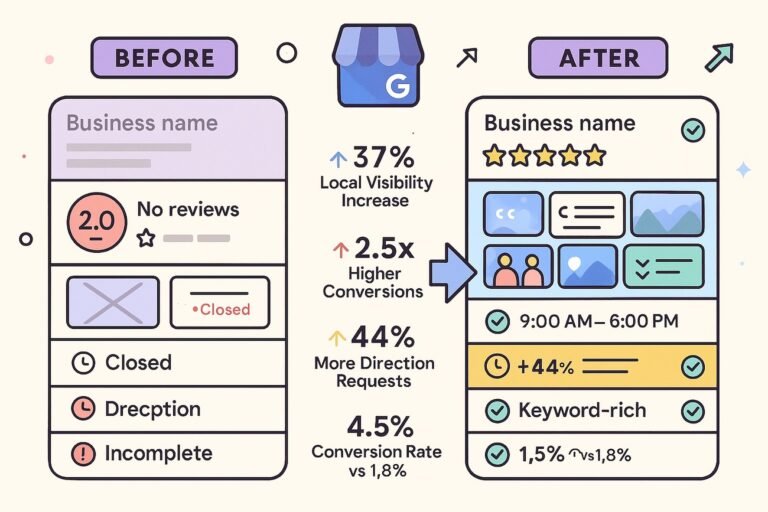
NLP-Rich Google Reviews & Geo-Tagged Imagery
A legacy agency only works on the Core Entity (your website). An elite 2026 agency uses advanced technical schema and digital PR to mathematically tie your Core Entity to these external trust nodes, proving to Google that you are a genuine, operating British business, not a lead-generation facade.
Chapter 4: Natural Language Processing (NLP) in Reviews
Let us deeply examine how Google interprets customer reviews. To a machine learning model, a review stating “Great service, highly recommend!” is mathematically useless. It provides positive sentiment, which helps your overall average, but it provides zero context.
An elite agency understands that Google uses NLP to extract specific entities from the text of your reviews. When a customer writes, “They fixed the sash windows on my Victorian house in Bristol perfectly,” the algorithm extracts the entities: [Sash Windows], [Victorian House], and [Bristol]. It then links these entities to your business profile, exponentially increasing your relevance for commercial queries related to window repair in that specific area.
Engineering the “Guided Request”
A top-tier UK agency will work directly with your operational team to implement a review-generation framework that extracts these entities. They will train you to stop sending generic links. Instead, you deploy Guided Requests.
Instead of asking, “Please leave a review,” the prompt becomes: “Thank you for choosing us! To help other locals, would you mind leaving a quick Google review mentioning what specific service we performed for you today and what neighbourhood in [City] you are located in?” By subtly guiding the customer, you feed Google’s NLP algorithm the exact semantic clusters it desperately needs to rank your profile.
Chapter 5: Vision AI and Authenticity Signals
A critical, yet widely ignored, component of the 2026 local algorithm is Image Recognition. A legacy agency will populate your Google Business Profile with polished stock photography downloaded from Unsplash, or heavily edited graphics created in Canva. They believe this looks “professional.” To Google, it looks fake.
Google’s Cloud Vision API analyzes every single pixel of the media uploaded to your profile. It instantly identifies stock models, recognizes text-heavy overlays, and evaluates the authenticity of the environment. If it determines your imagery is generic, it assigns zero trust weight to your profile.
The Power of Raw Data
Your local SEO partner should mandate raw, unedited, location-verifiable photos. They will instruct you to take photos with a smartphone, ensuring location services are turned on so the EXIF data captures the GPS coordinates. You must upload photos of your branded vans parked on recognizable UK streets, your staff in uniform at the storefront, and before-and-after shots of actual local projects. This provides irrefutable mathematical proof to the algorithm that your physical entity matches your digital claims.
Is Your Current UK Agency Harming Your Domain?
Don’t guess. Let our search engineers expose technical errors, local cannibalization risks, and missing entity schema that are actively suppressing your UK rankings.
Chapter 6: Technical Local Schema and UK Business Validation
Local SEO is not just off-page manipulation; it requires a flawless technical foundation. The most beautifully optimized Google Business Profile will struggle to rank if the website it links to is technically broken, slow, or mathematically confusing to search engine crawlers.
Advanced JSON-LD LocalBusiness Schema
An elite agency does not rely on basic WordPress plugins for schema. They deploy advanced, nested JSON-LD LocalBusiness markup. This is machine-readable code injected directly into the <head> of your website. It explicitly defines your entity to Google without them having to guess.
In the UK market, a masterclass implementation of Schema includes mapping your addressCountry: "GB", explicitly listing your UK Company Registration Number (CRN) using the identifier property, linking your VAT number, and utilizing areaServed polygons with precise geo-coordinates to establish your exact service radius. By linking your code directly to your official Companies House URI, you establish undeniable legal entity trust with the algorithm.
Chapter 7: Unstructured Digital PR vs. Toxic Link Building
As mentioned in Chapter 2, building profiles on low-quality directories is useless. However, off-page authority—Backlinks—remains one of the most powerful ranking signals in Google’s arsenal. The distinction lies entirely in the quality and relevance of those links.
The Danger of Private Blog Networks (PBNs)
Many budget UK agencies use offshore link farms or Private Blog Networks (PBNs). These are networks of fake websites created solely to link out to clients. This is a direct violation of Google’s Webmaster Guidelines. Google’s SpamBrain AI is exceptionally proficient at detecting these networks. When caught, your website will suffer a manual action penalty, effectively wiping your business off the internet. If an agency refuses to show you the exact URLs where they are building links, terminate the contract immediately.
Hyper-Local Digital PR
The 2026 approach is Digital PR. An elite agency earns links by creating genuinely newsworthy local content, proprietary data studies, or community initiatives, and pitching them to authoritative regional platforms. Securing a single backlink from a regional newspaper (like the Manchester Evening News or The Scotsman), a local university (.ac.uk), or a verified local chamber of commerce passes more localized trust to your domain than 10,000 spam directory listings.
Chapter 8: Building an Un-copyable Local Content Moat
The era of outsourcing 500-word blog posts to cheap writers is over. The influx of AI-generated content has flooded the internet with commodity information. Google’s algorithm has responded by dramatically increasing the threshold for what it considers “Helpful Content.”
To rank in a UK regional market, you must engineer Information Gain. This means introducing net-new data, original perspectives, or hyper-specific local context that does not currently exist in the top 10 search results. If your content simply summarizes what is already ranking, it will be suppressed.
Chapter 9: The 5 Red Flags of a Toxic UK SEO Agency
The barrier to entry in the digital marketing industry is dangerously low. Consequently, the UK market is flooded with white-label resellers and commodity vendors who utilize tactics that can result in algorithmic suppression. If a prospective agency exhibits any of these red flags during a pitch, walk away.
- Red Flag 1: “Guaranteed” Number One Rankings. No agency controls Google’s dynamically shifting, hyper-personalized local algorithm. Search results now vary street-by-street based on the searcher’s mobile device GPS. Anyone guaranteeing a static #1 rank is fundamentally misrepresenting how spatial search works.
- Red Flag 2: Proprietary CMS or Hosting Traps. Never hire an agency that requires you to move your website to their “custom” platform. This is a hostage tactic. If you leave the agency, you lose your website, your content, and all your accumulated SEO equity.
- Red Flag 3: Secretive Link Building Tactics. As discussed, if an agency’s link-building process is a “trade secret,” they are likely buying toxic PBN links that will eventually incur a Google penalty. Transparency is the hallmark of ethical, high-performance SEO.
- Red Flag 4: Fixation on Search Volume over Search Intent. Commodity agencies report on “Traffic.” Elite agencies report on “Conversions.” If an agency spends 80% of your budget trying to rank a broad informational blog post that drives national traffic from Scotland when your physical store is in Cornwall, they misunderstand commercial search intent.
- Red Flag 5: No Discussion of Business Operations. If an agency never asks about your sales process, your customer service protocols, or how you gather reviews, they are operating in a silo. Modern local SEO requires integrating digital strategy with real-world business operations to generate authentic signals.
Chapter 10: Executive Summary & Next Steps
Choosing a UK local SEO agency is no longer a marketing decision; it is a critical business continuity decision. In a landscape dominated by AI summaries, zero-click searches, and hyper-local spatial algorithms, only the most technically sound, hyper-prominent local entities will survive on the first page. Stop paying for commodity tasks, discard the outdated 2018 checklists, and start investing in true semantic authority.
The UK Local SEO Master FAQ (Real Answers for Real Businesses)
We scour forums like Reddit’s r/SEO and r/smallbusinessUK to find the actual, granular questions British business owners are struggling with. Here are the unvarnished answers.
Do I need a physical office in London to rank there, or can I use a Virtual Office?
Never use a Virtual Office (like Regus or WeWork mailboxes) to create a fake Google Business Profile. Google’s algorithm has aggressively clamped down on this. If multiple unrelated businesses share the exact same suite number and address, Google will suspend the profiles. If you serve London but are based elsewhere, you must set up your profile as a Service Area Business (SAB), hiding your residential/base address and designating your specific London service polygons.
My SEO agency changed my Google Business name to add keywords, and now I’m suspended. Why?
This is a classic commodity agency error. They likely changed your name from “Smith’s Plumbing” to “Smith’s Plumbing – 24/7 Emergency Plumber London.” This violates Google’s strict Name Guidelines. While it used to provide a short-term boost, in 2026, it triggers an automatic hard suspension. To get reinstated, you must provide Google with official documentation (like a utility bill or Companies House certificate) proving your real-world signage matches your digital name. Fire any agency that suggests keyword stuffing your business name.
Are directory links from Yell, Checkatrade, or Bark actually worth it for SEO?
For direct lead generation? Possibly, if you pay for premium placement on their platforms. For passing SEO authority to your website? No. These are structured citations. Because anyone can pay to be on them, Google assigns them very little PageRank value. They are required to establish baseline NAP (Name, Address, Phone) consistency, but paying a monthly retainer to an SEO agency just to manage directory links is a waste of capital.
How do we do local SEO as a tradesman (Plumber/Electrician) without a physical shop?
You execute a Service Area Business (SAB) strategy. First, hide your home address on your GBP but set your exact service radii. Second, build robust “Location Pages” on your website for your primary target towns (e.g., /electrician-in-leeds, /electrician-in-bradford). Crucially, do not just copy-paste the same text and change the city name. You must inject Information Gain by embedding photos of actual jobs done in that specific city, local reviews mentioning the city, and localized schema markup.
My agency says they built 500 backlinks last month, but my traffic dropped. What happened?
You were likely the victim of a toxic link-building campaign (PBNs or offshore link farms). Google’s SpamBrain algorithm doesn’t just ignore these links; if the velocity and toxicity are high enough, it actively suppresses your domain. Quality massively outweighs quantity. One highly relevant link from a local UK university (.ac.uk) or a regional newspaper is worth more than 5,000 spun directory links. You need a full technical SEO audit to identify and disavow this toxic profile.
Is paying for Trustpilot or Feefo better than focusing on Google Reviews for local search?
Trustpilot and Feefo are excellent for on-site conversion rate optimization (CRO) and building trust with users once they are on your website. However, for ranking in the Google Local Pack (Maps), native Google Reviews are the undisputed king. Google heavily weights its own ecosystem. Focus your primary post-purchase “Guided Request” strategy on securing Google Reviews first, as Google’s NLP directly analyzes these to boost your local entity salience.
How long does it take for a Local SEO agency to deliver ROI?
If an agency promises overnight results, they are lying. For a brand new domain in a competitive UK local market (like solicitors in Manchester), establishing foundational entity trust takes 3 to 6 months. For established domains requiring technical cleanup, significant ranking shifts in the Local Pack can often be engineered within 60 to 90 days once core technical blockers are resolved.
Local SEO without a high-converting site is like traffic arriving at a closed shop. Our small business website design services are built to turn that traffic into bookings.